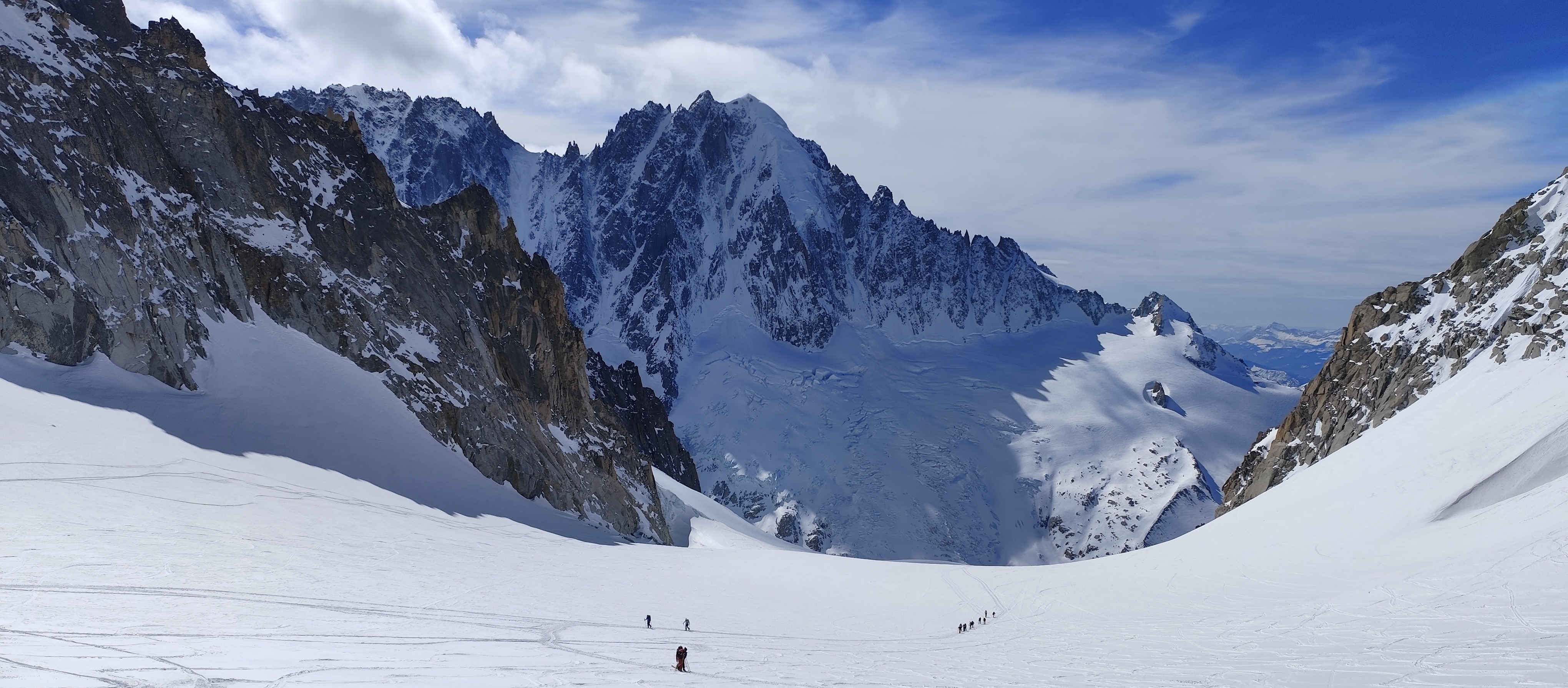
The Haute Route Chamonix-Zermatt is the most iconic ski traverse in the Alps. Over roughly 100 km, it connects the church of Chamonix (France) to the church of Zermatt (Switzerland), crossing a succession of glacial passes above 3,500 m.
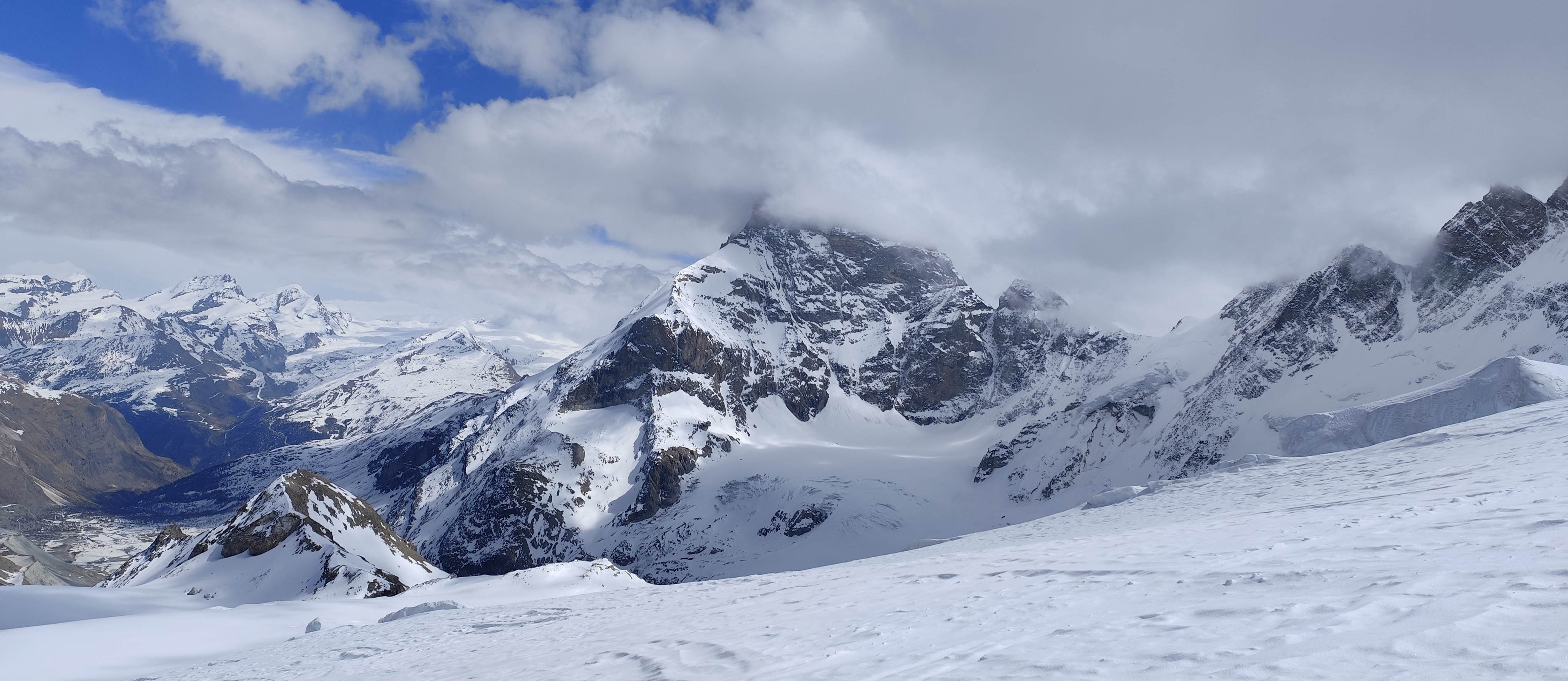
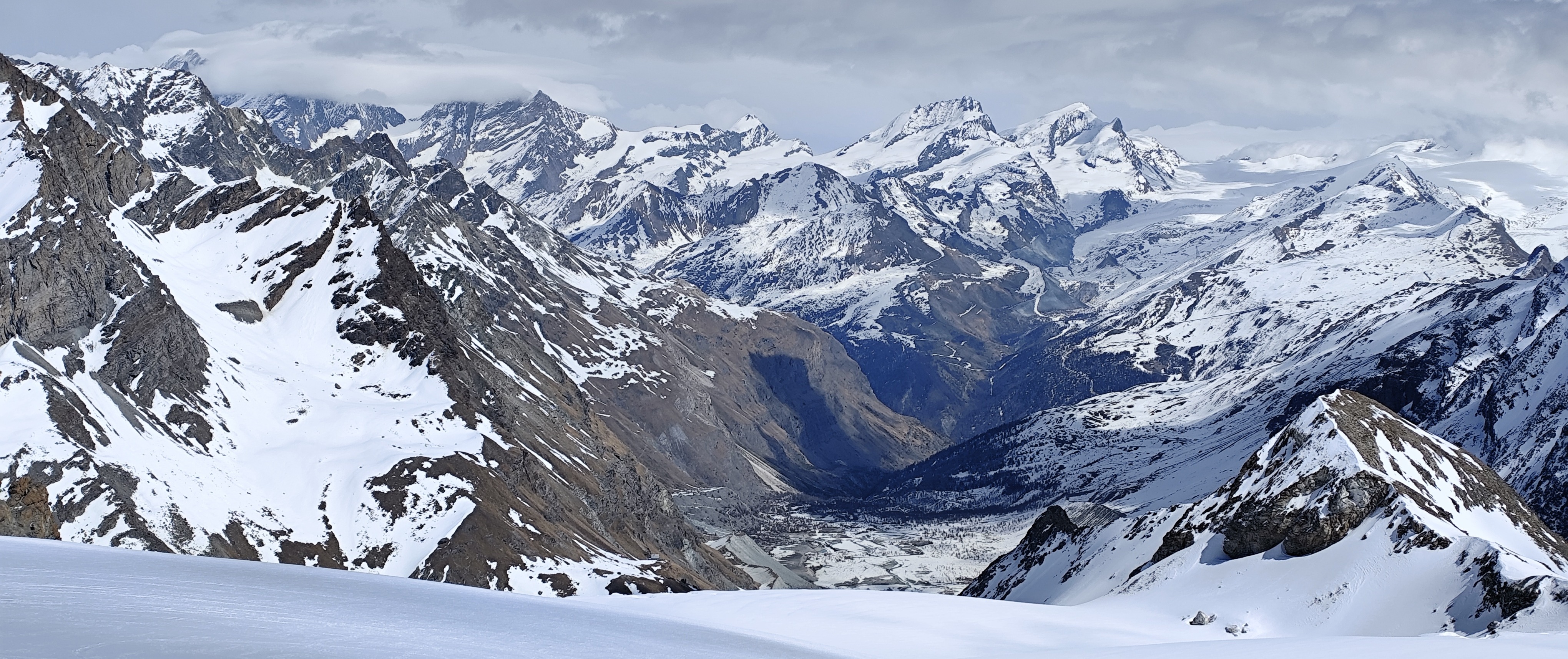
The route crosses some of the most spectacular landscapes in the Alps: Mont Blanc glaciers, upper Bagnes valley, Plateau du Couloir, Otemma glacier, and finally the breathtaking descent to Zermatt with the Matterhorn as backdrop.
Historically completed in 5 to 7 days by ski tourers, the Haute Route has become a benchmark FKT route since the early 2000s.
The standard FKT line starts at the church of Chamonix (1,043 m) and finishes at the church of Zermatt (1,616 m).
An FKT attempt on this route demands a rare combination of skills: exceptional endurance, elite alpine and ski mountaineering technique, ability to perform at altitude, strategic effort management over 13 to 24 hours, and intimate knowledge of every meter of the course.
Snow quality is critical: supportive snow at altitude and a solid overnight refreeze are key for fast times.
Teams generally start very early in the morning, or the previous evening for women's efforts over 20 hours. Night navigation on crevassed glaciers adds major difficulty.
The 18 segments of the Haute Route, from Chamonix to Zermatt.
Opening section on road and forest track with a gentle uphill grade. Top teams move close to 10 km/h while staying economical.
First major climb: over 2,000 m of ascent to Col du Chardonnet. Altitude, booting and crampons make it a complete performance test.
First technical descent with a steep couloir and crevassed glacier travel. Ski quality already creates meaningful gaps.
Short but very steep climb to Grand Luy. An explosive effort where raw power and lactate tolerance matter.
Long descent to La Fouly with almost 1,800 m of vertical loss. Terrain reading and smooth skiing drive the biggest gains.
Long steady climb to Col des Planards. Less technical than Chardonnet, but demanding because of duration and pace control.
Fast descent to Barrage des Toules. A flowing section where commitment on skis can save valuable minutes.
Key strategic segment: direct climbing line versus mixed route with extra transitions. Route choice has major time impact.
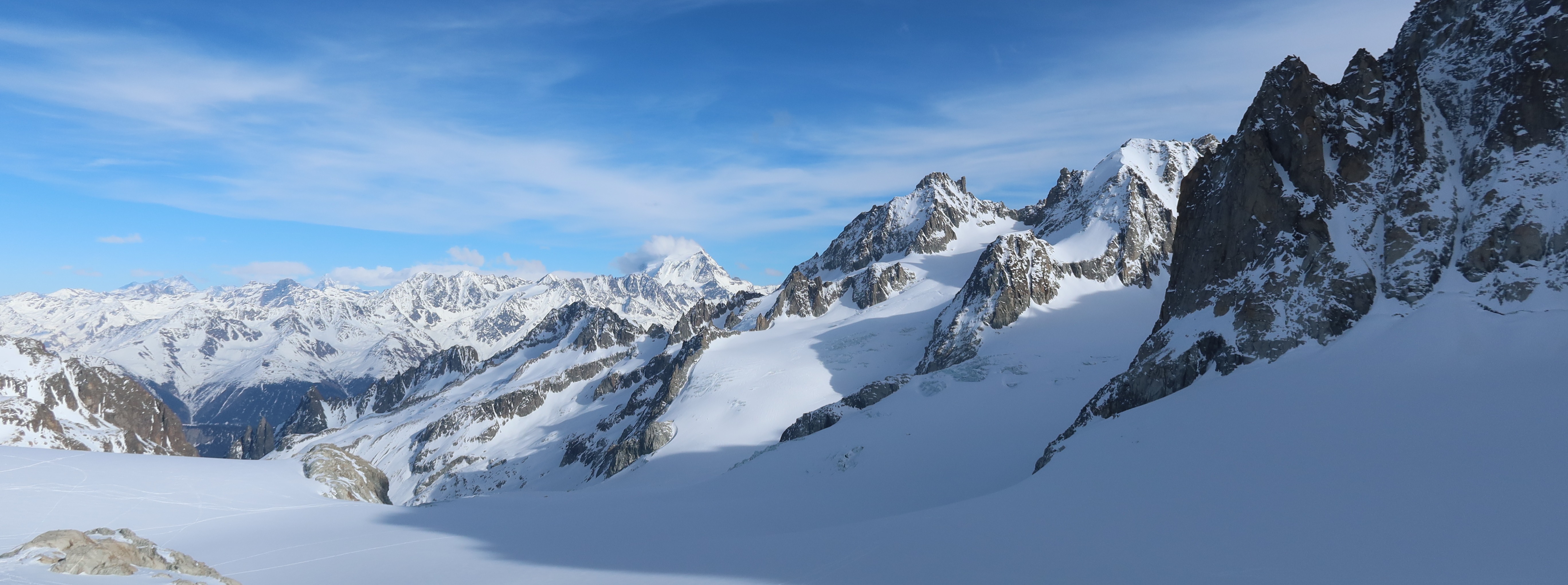
Major climb to Plateau du Couloir, the route high point. After many hours, energy management and altitude tolerance are crucial.
Very short technical glacier descent. Even this micro-section rewards immediate transitions and clean execution.
Short transition climb to Col du Sonadon. Small on paper, but every second matters here.
Long descent to Chanrion across varied alpine terrain. Top teams keep speed despite accumulated fatigue.
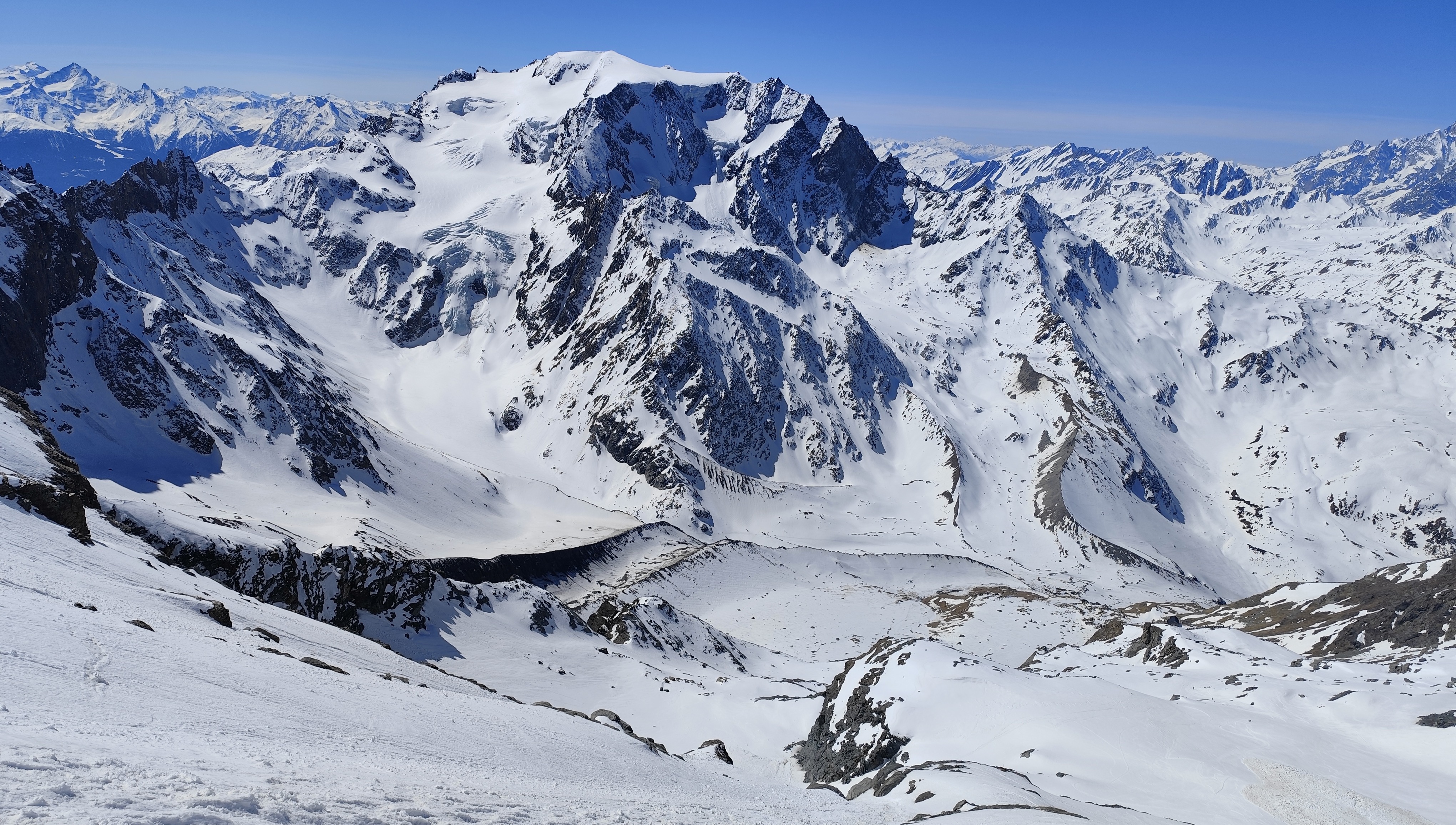
Longest segment by distance: Otemma glacier ascent to Col de l'Évêque. Mental consistency and movement economy are decisive.
Descent on Haut Glacier d'Arolla, generally more uniform. Fast gliding quality matters more than extreme technical difficulty.
Sustained climb to Col du Mont Brûlé. Holding strong vertical speed this late is a clear marker of resilience.
Short descent to Tsa de Tsan glacier. Conditions and timing can make this section surprisingly tricky.
Final significant climb to Col de Valpelline. Last major filter before the long descent to Zermatt.
Seventeen-kilometer final descent into Zermatt. Time gaps often lock in—or grow—after 12 to 20 hours of effort.
Haute Route Ski Mountaineering Records
On one side, Mathéo Jacquemoud, a major figure in French ski mountaineering, multiple world champion and two-time winner of the Pierra Menta, known for his consistency, race intelligence and ability to maintain a steady pace without breaking. A mountain guide, he embodies a highly controlled approach to long efforts. On the other side, William Boffelli, an Italian athlete with a background in cross-country skiing, who has become one of the most complete athletes of his generation, performing at the highest level in both ski mountaineering and skyrunning. Extremely enduring and highly technical, he notably holds the Mont Blanc round-trip record (May 31, 2025), a testament to his exceptional level in long alpine traverses. Their partnership combines tactical precision and raw power, with a record-setting traverse defined by minimal stops, lightning-fast transitions and perfect energy management.
Samuel Équy represents modern ski mountaineering at its most demanding: a member of the French elite, world champion in long-distance races, highly effective in team formats, combining explosiveness, endurance and tactical awareness. Alongside him, Benjamin Védrines brings a radically different profile: that of a top-level alpinist, known for his fast link-ups on iconic peaks such as the Eiger or the Matterhorn. Their record marked a strategic shift, with a high pace from the start and a more “alpinist” approach rather than purely competitive, combining commitment, speed and terrain reading.
Bastien Fleury, from Chamonix and notably a former member of the PGHM, represents mountain experience in its most authentic form, with a strong culture of efficiency and terrain awareness. Olivier Meynet, a highly versatile figure, has excelled in ski mountaineering, extreme skiing and freeride, combining excellent skiing technique with remarkable adaptability. Their 2016 record stood for a long time thanks to careful yet highly effective pacing, at a time when equipment, route knowledge and optimization were still less advanced than today. Their performance remains a benchmark of consistency and race intelligence.
This duo belongs to the foundational history of modern records on the Haute Route. Stéphane Brosse was one of the greatest names in ski mountaineering, a three-time world champion, multiple Pierra Menta winner and a true pioneer of speed in the mountains. His tragic death in 2012 during a race on the Aiguille d’Argentière deeply impacted the mountain community. Lionel Bonnel, a ski instructor, trail runner and endurance specialist, brought remarkable strength and consistency. Their 2008 performance paved the way for modern record attempts, laying the foundations for a fast and committed approach to the Haute Route.
Marie Pollet-Villard belongs to the new French generation of ski mountaineering: a former junior national champion, trained at a high level, she stands out for her consistency and her ability to maintain a steady pace over long durations. Laurie Renoton, coming from a more versatile background between ski mountaineering, trail running and mountain sports, excels in technical sections and varied terrain. Their record marks a new milestone for the women’s level on the Haute Route, with a very modern approach: fast transitions, optimized energy management and sustained commitment, reflecting the rapid progression of the women’s level on long alpine traverses.
Hillary Gerardi is globally known for her performances in trail running and skyrunning, particularly around Mont Blanc, where she has set several major benchmarks. She brings exceptional endurance and the ability to sustain a very high level of effort over long durations. Valentine Fabre, a former World Cup ski mountaineer and a medical doctor, has extensive experience in the mountains, both in competition and alpinism. Together, they form an extremely complementary duo: power and endurance on one side, technical mastery and experience on the other. Their record illustrates the spectacular progression of the women’s level, with an approach that is now highly structured and increasingly close to male standards.
This Swiss duo, very balanced and experienced, marked an important step in the recent history of the women’s Haute Route. Clara Masserey, from the younger Swiss generation, quickly established herself as a strong team athlete. Gaëlle Perrier, more experienced and well known in Swiss ski mountaineering, brings consistency and excellent management of long efforts, especially during night sections. Their record significantly lowered the previous mark thanks to steady pacing, strong night management and perfect complementarity, in a style that was both efficient and controlled.
The first major modern women’s reference on the Haute Route, this duo marked a turning point in the discipline. Valentine Fabre, drawing on her experience in the World Cup and in mountaineering, and Hillary Gerardi, a specialist in extreme endurance, achieved a committed and perfectly prepared traverse. This record marked the beginning of the professionalization of women’s attempts: precise route reconnaissance, optimized strategy and dedicated preparation. Their performance paved the way for a new generation of women’s teams that are increasingly fast and structured.
Also on our sister site
Explore Chamonix ↔ Mont-Blanc round-trip records, with detailed attempt analysis and automatic comparison through your Strava account.
Visit mont-blanc-fkt.com →